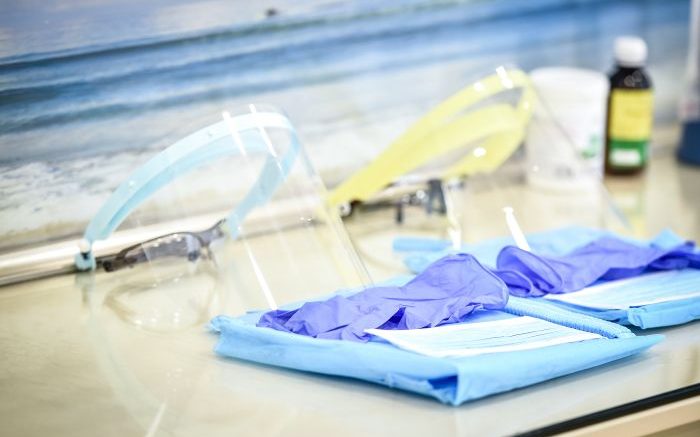
Personal protective equipment (PPE) should effectively protect healthcare workers (HCWs) when treating infectious patients; however, during doffing contamination from outside of the PPE could be transferred and might cause serious infection, say Pfuderer, et al. (2025). Therefore, complex doffing procedures have been developed, which include disinfection steps and would thereby protect the HCWs even if a contamination event occurred during doffing, they add, however, assessing these complex multi-step procedures regarding risk of contamination and infection is challenging. The use of harmless surrogates with pathogen-mimicking properties such as lipid nanoparticles encapsulating DNA (LNPs) could provide valuable insights into the effectiveness of doffing and disinfection procedures. Compared to the state-of-the-art method of contamination monitoring using fluorescent lotions LNPs promise to be more sensitive and give additional insights into the value of the disinfection steps.
After pre-testing the suitability of LNPs as viral surrogates in terms of detection limit and susceptibility to ethanolic disinfection, LNPs with different barcodes were used to evaluate the PPE doffing procedure in place at the Cantonal Hospital Baden (Switzerland). During the biannual HCWs’ PPE training, several sites of the PPE were deliberately contaminated with LNPs after donning. After completion of the doffing procedure, the hands and faces of the HCWs and several environmental sites were analyzed for LNP contamination via qPCR.
The analysis showed that no contamination of HCWs’ hands and faces was detectable, indicating the effective protection of HCWs. But some environmental sites were contaminated during the doffing procedure. Owing to the disinfection sensitivity of the LNPs it could be shown that the LNPs detected were disintegrated during one of the disinfection steps of the procedure.
This study demonstrates that LNPs can be used as viral surrogates during the evaluation of PPE doffing procedures. LNPs can lead to insightful results due to their low detection limit and the susceptibility towards disinfection, making this method superior to fluorescent lotions. Consequently, indications for the procedures’ effectivity in inhibiting pathogen transfer to HCWs were found using LNPs. At the same time, blind spots in environmental contamination were uncovered, and the necessity of the disinfection steps in the protocol was displayed.
Reference: Pfuderer L, et al. Doffing procedures of personal protective equipment evaluated with lipid nanoparticles as viral surrogates: uncovering potential blind spots. Antimicrobial Resistance & Infection Control. Dec. 11, 2025