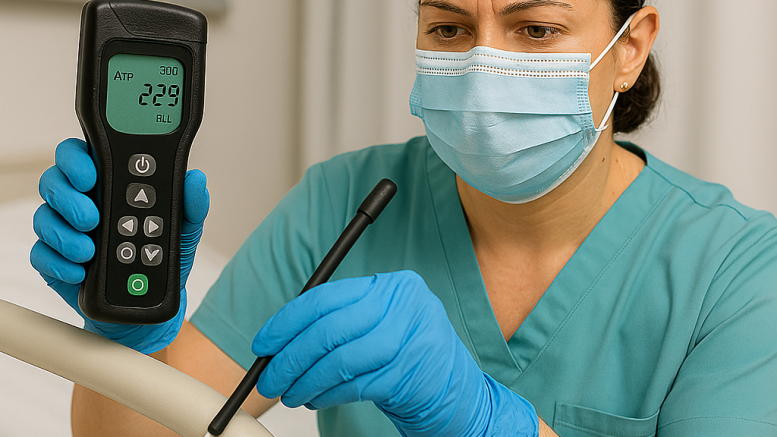
Maintaining high standards of environmental hygiene in healthcare settings is critical for preventing healthcare-associated infections (HAIs). Traditional cleanliness assessments, including visual inspections and microbial cultures, often lack sensitivity and immediacy. This review aims to evaluate the utility, advantages, and limitations of adenosine triphosphate (ATP) bioluminescence assays as a rapid, objective method for monitoring hospital surface hygiene, say Kotsiou, et al. (2026) who conducted a comprehensive review of studies published between 2020 and 2025 using PubMed and Scopus databases. Studies were included if they evaluated ATP bioluminescence as a primary method for assessing hygiene in clinical environments, medical instruments, or healthcare-related settings.
The authors say that ATP bioluminescence has demonstrated consistent advantages across diverse healthcare settings. It identifies organic residues undetectable by visual inspection and supports real-time corrective actions, particularly in intensive care units, endoscopy suites, and operating rooms. It has also been effectively used in outbreak investigations, veterinary clinics, and pediatric dental settings. Despite its strengths, ATP assays exhibit variability depending on detector type, surface characteristics, and environmental conditions. Moreover, ATP cannot differentiate microbial from non-microbial sources, necessitating complementary methods for pathogen-specific detection.
The authors conclude that ATP bioluminescence is a practical, rapid, and increasingly validated tool for improving surface hygiene monitoring and infection control in healthcare environments. While not a replacement for microbial cultures, it serves as a valuable adjunct to existing assessment methods. Standardized protocols, calibrated thresholds, and integration with other diagnostic tools are essential for maximizing its effectiveness and comparability across institutions.
Reference: Kotsiou, O.S., Gouta, E., Natsaridis, N. et al. The role of ATP bioluminescence in monitoring surface hygiene in hospital settings: a comprehensive review. Antimicrob Resist Infect Control (2026). https://doi.org/10.1186/s13756-026-01698-8